HR-XML standard is a set of XML specifications that allows e-business and data-exchange automation in the human resources area. This new version (HR-XML 3.0) of the HR-XML standards aligns its schemas for human resources interoperability applications with the Open Applications Group implementation of UN/CEFACT (United Nations Centre for Trade Facilitation and Electronic Business) core components, making them more universal than ever.
By developing and publishing open data exchange standards based on XML, the HR-XML Consortium provides the means for any company to transact with other companies without having to establish, engineer, and implement many separate interchange mechanisms.HR-XML 3.0 Standards - 23rd September 2009
Over the years, a variety of custom XML formats have been developed for resumes and CVs, but none of them has grown popular enough to become an industry standard. While there is nothing wrong with writing resumes the old way, putting some kind of structure to resumes would be beneficial.
One of the XML vocabularies published by HR-XML is the candidate specification. This specification defines a resume or CV document in pure XML, allowing the content to be processed and exchanged easily.
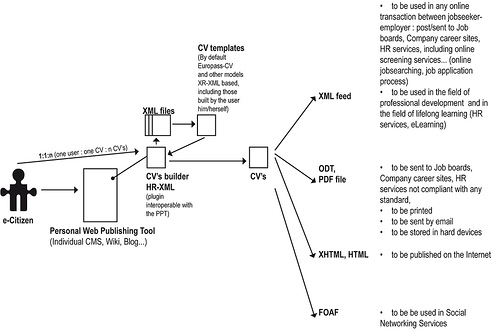 Instead of treating resumes as just regular binary blobs of PDF or .doc files, search engines could actually be made to do a lot more with structured resumes.
Right now each Recruitment Agency, Job Board or Employer has to maintain its own database, with no way of converting the information in the database to an actual usable resume. Imagine if people could just upload their structured resumes in some repository (with the appropriate access control etc) and then searching would become so much more manageable.
Maintaining different formats of my resume and keeping them consistent with one another is a huge effort. A structured resume offers an elegant solution to this problem.
Write your resume once in some format, and then there will be tools to take that specification and convert it to whatever format you want. For each format, you might be able to control the presentation separately.

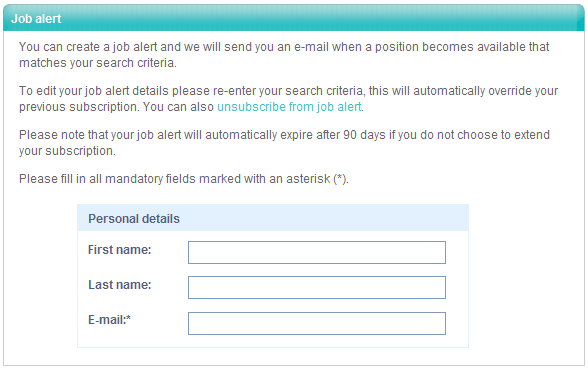
 Chances are, you spent a fair amount of money and energy to build your job alert/email database. Except, over time we change email addresses and forget to unsubscribe from mailing lists.

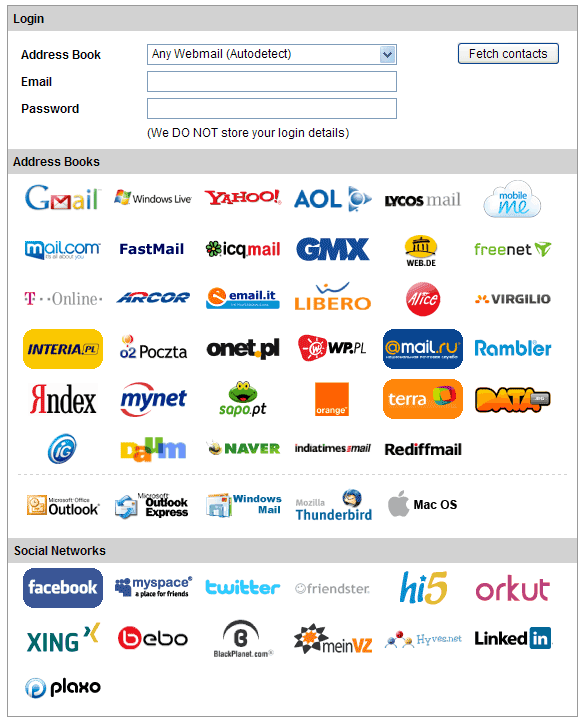
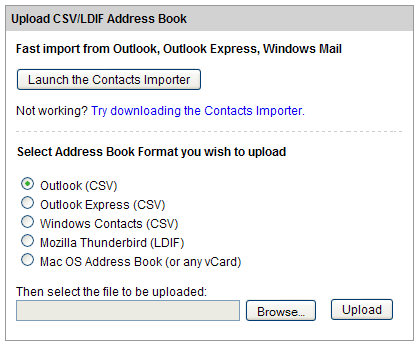 We know that the best way to generate genuine traffic is by referrals. Allowing your users to invite/import their friends and contacts from the various number of social networking or email providers is a popular method to virally grow your website subscribers.
 ean